
A Stretch Too Far?
)
Expecting a baby can be a time of great excitement and eager anticipation as well as of anxiety and fear. This is true of all women, but having a diagnosis of hypermobility Ehlers Danlos syndrome (hEDS) can bring additional worries. Each subtype within the EDS family requires a slightly different care pathway in pregnancy, birth and postnatally, and so, whilst those with the classic and vascular subtypes require consultant-led care, this is not necessarily true for those with hEDS. Here is a run-down of the additional things you need to be aware of if you are pregnant and have hEDS.
First Trimester
Where to book: In spite of what you may have been told, with good antenatal care and appropriate management at birth, pregnancy outcomes for those with hEDS are just as good as for the general pregnant population1,,2.
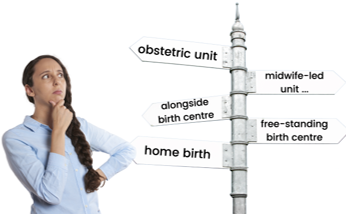
At your first midwife’s appointment, let them know if you have any co-morbidities (eg. chiari malformation, organ prolapse, cardiac valve insufficiency) and, if not, then your midwife can be reassured that you are a good candidate for midwife care3. With the increased likelihood within the hEDS population of anxiety and panic4, being under midwife care brings options of quieter birthing environments which may help you to relax more and avoid certain medical interventions5.
If you choose to birth in hospital, it is important that you are additionally booked for a home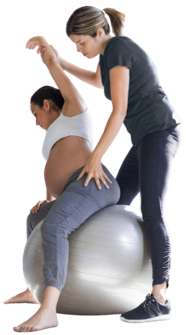 birth - although not all within the hEDS community birth very quickly, there is an increased likelihood6 and having a back-up plan makes an unexpected home birth safer.
Check your iron stores: Those with hEDS are at an increased risk of having low iron stores7 even in the presence of a normal Hb, so, in addition to the standard antenatal full blood count (FBC), you should also have blood taken to check your iron stores (ferritin).
Get physio input early: Pregnancy hormones soften connective tissue and so those with hEDS are at a significantly increased likelihood of experiencing pelvic girdle and other joint pain8. An early referral to a maternity physiotherapist, before problems arise, is important and you can help yourself by staying well conditioned - walk, swim, or do simple daily stretches. Pregnancy fitness classes run by a physio is a safe option if you prefer exercising in a group.
Second Trimester
Care for your hands: The middle trimester is, for many women, the easiest part of pregnancy but there are a few things that you might experience that are out of the ordinary compared to your non-hEDS friends. As well as back and pelvic aches, you may be more likely8 to experience the tingling and pain associated with carpal tunnel syndrome. Take extra care in bed not to let your wrists over-bend and, if you do experience symptoms, ask your GP or physio to prescribe wrist splints.
Feeling the squeeze: Those with hEDS/HSD are not at increased likelihood of premature birth or an ‘incompetent’ cervix9 but they do have an altered interoception10. This means that you are more likely to feel the internal workings of your body and so might notice the normal Braxton Hicks contractions very much earlier than normal. These ‘practice’ contractions are harmless and keep your womb well-toned and healthy. Your local hospital can check you and your baby if you do experience very early B.H.s and reassure you that all is well. Labour contractions are different - they gradually become longer and stronger - so don’t worry that you will ‘miss the real thing’ if you learn to ignore the B.H.s.
Third Trimester
Change the way you work: As your body starts to prepare for birth, you may find your sleep is a little more broken due to aches, heartburn and, quite simply, hormonal changes that make you sleep in shorter but deeper patches. This is a good time to consider the possibility of working from home and/or reducing your work hours.
See an anaesthetist: If you have POTS, chiari malformation, spinal disc degeneration, temperomandibular joint dysfunction (TMJ), or have a reduced effect from local anaesthetic then ask your midwife to refer you for a pre-birth assessment with the maternity anaesthetic team as all these conditions may have implications for local or general anaesthesia that need to be prepared for.
Perineal care: Those with hEDS are often told that they are more at risk of severe perineal tearing and post-birth pelvic prolapse. In fact, evidence shows that they are less likely to suffer extensive perineal damage such as a 3rd degree tear and are no more likely than the general population to suffer birth related pelvic prolapse11,12. For this reason, and also due to the increased tendency to bruise, perineal massage should be done with caution, if at all. More important is correct control of your baby’s head as it is being born13 and the avoidance of an episiotomy6.
Stitches: During this last trimester, ask your midwife to request some black silk sutures to put in your hospital notes ready for your birth. These are often available from dental and faciomaxillary departments within a hospital and are not only gentler on fragile hEDS tissues, but can also be left in place for additional days if a longer healing time is needed12,14.
And finally …
Remember that, whilst having hEDS may well bring some additional challenges to pregnancy and birth, with good preparation and care you are just as likely to have a good outcome as your unaffected friends and may well have a quicker and more straightforward birth. So arm yourself with good information and then relax and enjoy your pregnancy journey.
For further help and support
hEDS is a complex condition affecting all organs and systems within the affected body. As such, this blog can only touch the surface of the information that you and your care givers need to guide you along your pregnancy and birth journey confidently and safely. For more information, visit the EDS UK website and consider purchasing Stretched to the Limits: Supporting Women with Hypermobile Ehlers-Danlos Syndrome (hEDS) Through Pregnancy, Labour, and Postnatally. For details of how to get an author’s discount, see below.
Resources:
- Rachel FitzD Bio:
Having worked as a specialist infant feeding midwife, active birth teacher and parenting consultant for over 30 years, I retired from midwifery in 2018 to focus all my attention on my parenting consultancy, writing and media work. I am a regular expert presenter and writer for The Baby Show. I have written two books - Your Baby Skin To Skin (https://www.amazon.co.uk/Your-Baby-Skin-Learn-instincts/dp/1910336319) and Stretched to the Limits: Supporting Women with Hypermobile Ehlers-Danlos Syndrome (hEDS) Through Pregnancy, Labour, and Postnatally (https://www.amazon.co.uk/Stretched-Limits-Hypermobile-Ehlers-Danlos-Postnatally/dp/1839972491)
I have hypermobility Ehlers-Danlos syndrome (hEDS) and have raised four sons, each of which has been affected to some degree or another.
I volunteer support for EDS UK and wrote their pregnancy information leaflet and online guide for women and health care professionals as well as producing information films for them.
- 20% discount for Stretched to the Limits:
- UK - https://uk.jkp.com/products/stretched-to-the-limits
- US - https://us.jkp.com/products/stretched-to-the-limits
- AUS - https://aus.jkp.com/products/stretched-to-the-limits
Then use RFDSTL20 at checkout
- Stretched to the Limits with Rachel FitzD Facebook groups: https://www.facebook.com/groups/stretched.to.the.limits
References
- Lind, J. and Wallenburg, H.C.S. (2002). Pregnancy and the Ehlers-Danlos syndrome: a retrospective study in a Dutch population. Acta Obstetricia Et Gynecologica Scandinavica, [online] 81(4), pp.293–300. doi:10.1034/j.1600-0412.2002.810403.x. https://obgyn.onlinelibrary.wiley.com/doi/full/10.1034/j.1600-0412.2002.810403.x
- Sundelin, H.E.K., Stephansson, O., Johansson, K. and Ludvigsson, J.F. (2016). Pregnancy outcome in joint hypermobility syndrome and Ehlers-Danlos syndrome. Acta Obstetricia et Gynecologica Scandinavica, 96(1), pp.114–119. doi:10.1111/aogs.13043. https://obgyn.onlinelibrary.wiley.com/doi/epdf/10.1111/aogs.13043
- NICE (2014). Recommendations | Intrapartum care for healthy women and babies | Guidance | NICE. [online] Nice.org.uk. Available at: https://www.nice.org.uk/guidance/cg190/chapter/Recommendations#place-of-birth. https://www.nice.org.uk/guidance/cg190/chapter/Recommendations#place-of-birth
- Martín-Santos, R., Bulbena, A., Porta, M., Gago, J., Molina, L. and Duró, J.C. (1998). Association Between Joint Hypermobility Syndrome and Panic Disorder. American Journal of Psychiatry, 155(11), pp.1578–1583. doi:10.1176/ajp.155.11.1578. https://ajp.psychiatryonline.org/doi/pdf/10.1176/ajp.155.11.1578
- Lothian, J.A. (2014). Healthy Birth Practice #4: Avoid Interventions Unless They Are Medically Necessary. The Journal of Perinatal Education, [online] 23(4), pp.198–206. doi:10.1891/1058-1243.23.4.198. https://www.ncbi.nlm.nih.gov/pmc/articles/PMC4235054/
- Castori, M., Morlino, S., Dordoni, C., Celletti, C., Camerota, F., Ritelli, M., Morrone, A., Venturini, M., Grammatico, P. and Colombi, M. (2012). Gynecologic and obstetric implications of the joint hypermobility syndrome (a.k.a. Ehlers-Danlos syndrome hypermobility type) in 82 Italian patients. American Journal of Medical Genetics Part A, 158A(9), pp.2176–2182. doi:10.1002/ajmg.a.35506. https://nebula.wsimg.com/984eff830b70165a6a6d6d7ccaee8e29?AccessKeyId=BFACF0D24D833A99FAF8&disposition=0&alloworigin=1
- Wessling-Resnick, M. (2010). Iron Homeostasis and the Inflammatory Response. Annual Review of Nutrition, [online] 30(1), pp.105–122. doi:10.1146/annurev.nutr.012809.104804. https://www.ncbi.nlm.nih.gov/pmc/articles/PMC3108097/#abstract-1title
- Ali, A., Andrzejowski, P., Kanakaris, N.K. and Giannoudis, P.V. (2020). Pelvic Girdle Pain, Hypermobility Spectrum Disorder and Hypermobility-Type Ehlers-Danlos Syndrome: A Narrative Literature Review. Journal of Clinical Medicine, 9(12), p.3992. doi:10.3390/jcm9123992. https://www.ncbi.nlm.nih.gov/pmc/articles/PMC7764306/
- Pagon, R., Bird, T. and Dolan, C. (1993). Ehlers-Danlos Syndrome, Hypermobility Type Synonyms: EDS Hypermobility Type, EDS Type III, Ehlers-Danlos Syndrome Type III. [online] Available at: https://www.rareconnect.org/uploads/documents/ehlers-danlos-syndrome-hypermobility-type.pdf [Accessed 1 Feb. 2023]. https://www.rareconnect.org/uploads/documents/ehlers-danlos-syndrome-hypermobility-type.pdf
- Hamonet, C., Delarue, M., Lefevre, J., Rottembourg, J. and Zeitoun, J. (2021). Scholarly Journal of Otolaryngology Ehlers-Danlos Syndrome (EDS) : A Common and often Disregarded Cause of Serious Gastrointestinal Complications in Children and Adults. [online] doi:10.32474/SJO.2021.07.000256. https://lupinepublishers.com/otolaryngology-journal/pdf/SJO.MS.ID.000256.pdf
- Knoepp, L.R., McDermott, K.C., Muñoz, A., Blomquist, J.L. and Handa, V.L. (2012). Joint hypermobility, obstetrical outcomes, and pelvic floor disorders. International Urogynecology Journal, 24(5), pp.735–740. doi:10.1007/s00192-012-1913-x. https://link.springer.com/article/10.1007/s00192-012-1913-x
- Tinkle, B., Castori, M., Berglund, B., Cohen, H., Grahame, R., Kazkaz, H. and Levy, H. (2017). Hypermobile Ehlers-Danlos syndrome (a.k.a. Ehlers-Danlos syndrome Type III and Ehlers-Danlos syndrome hypermobility type): Clinical description and natural history. American Journal of Medical Genetics Part C: Seminars in Medical Genetics, 175(1), pp.48–69. doi:10.1002/ajmg.c.31538. https://onlinelibrary.wiley.com/doi/10.1002/ajmg.c.31538
- Laine, K., Skjeldestad, F.E., Sandvik, L. and Staff, A.C. (2012). Incidence of obstetric anal sphincter injuries after training to protect the perineum: cohort study. BMJ Open, 2(5), p.e001649. doi:10.1136/bmjopen-2012-001649. https://bmjopen.bmj.com/content/bmjopen/2/5/e001649.full.pdf
- boydbiomedical.com. (n.d.). Non-Absorbable Sutures, Explained. [online] Available at: https://boydbiomedical.com/articles/non-absorbable-sutures-explained#:~:text=Silk%20also%20has%20low%20tensile [Accessed 4 Feb. 2023]. https://boydbiomedical.com/articles/non-absorbable-sutures-explained#:~:text=Silk%20also%20has%20low%20tensile,a%20temporary%20suture%20during%20surgery